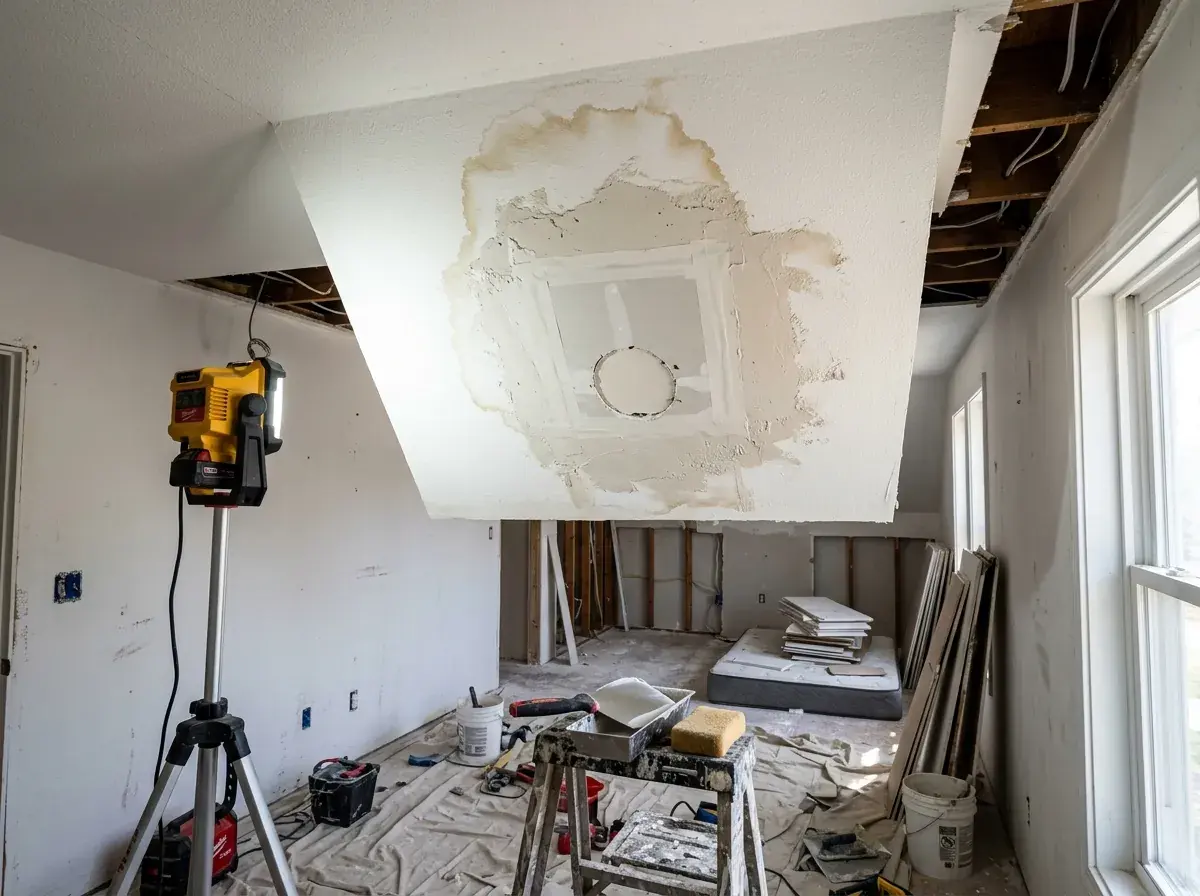
Can you repair a water-stained ceiling without replacing the drywall?
Often yes. If the drywall is dry, firm and not sagging, we seal the stain with a stain-blocking primer, skim any rough spots and paint. If the board is soft, crumbling or bowed, we cut out the damaged section and patch in new drywall. Either way the leak itself has to be fixed first, or the stain will come back.
Why do cracks keep coming back in my ceiling?
Usually because the crack was filled but not taped. Hairline cracks at drywall seams move with seasonal humidity and temperature swings, and plain compound cannot bridge that movement. We re-tape the seam with mesh or paper tape, then skim over it. Cracks that keep reopening in a straight line along a seam are the classic case.
What causes nail pops in Charleston ceilings?
Wood framing shrinks and swells with humidity, which slowly pushes drywall nails out. Popcorn texture hides them for decades; a smooth ceiling shows every one. We drive a screw beside each pop to anchor the board, set the old nail, then fill and skim. It is a standard step in every removal job we do.
Do I need to fix ceiling damage before popcorn removal or after?
After the scrape, before the finish. Scraping exposes problems that were hidden under the texture, so we inspect the bare drywall and make repairs at that stage. Fixing the source of a water leak is the one thing that should happen before we start, since we cannot finish a ceiling that is still getting wet.
How much does ceiling drywall repair cost?
Small repairs like nail pops, seam cracks and minor patches are usually folded into the removal estimate rather than priced separately. Larger patches, sagging sections or water-damaged areas that need new board are quoted on-site based on the size of the repair. We put every repair on the written estimate so there are no surprises.