Asbestos Testing for Popcorn Ceilings in Charleston

If your ceiling went up before 1990, a lab test comes before any scraping. Here is what South Carolina rules say, how testing works, and what happens if the result is positive.

Get a Free Quote
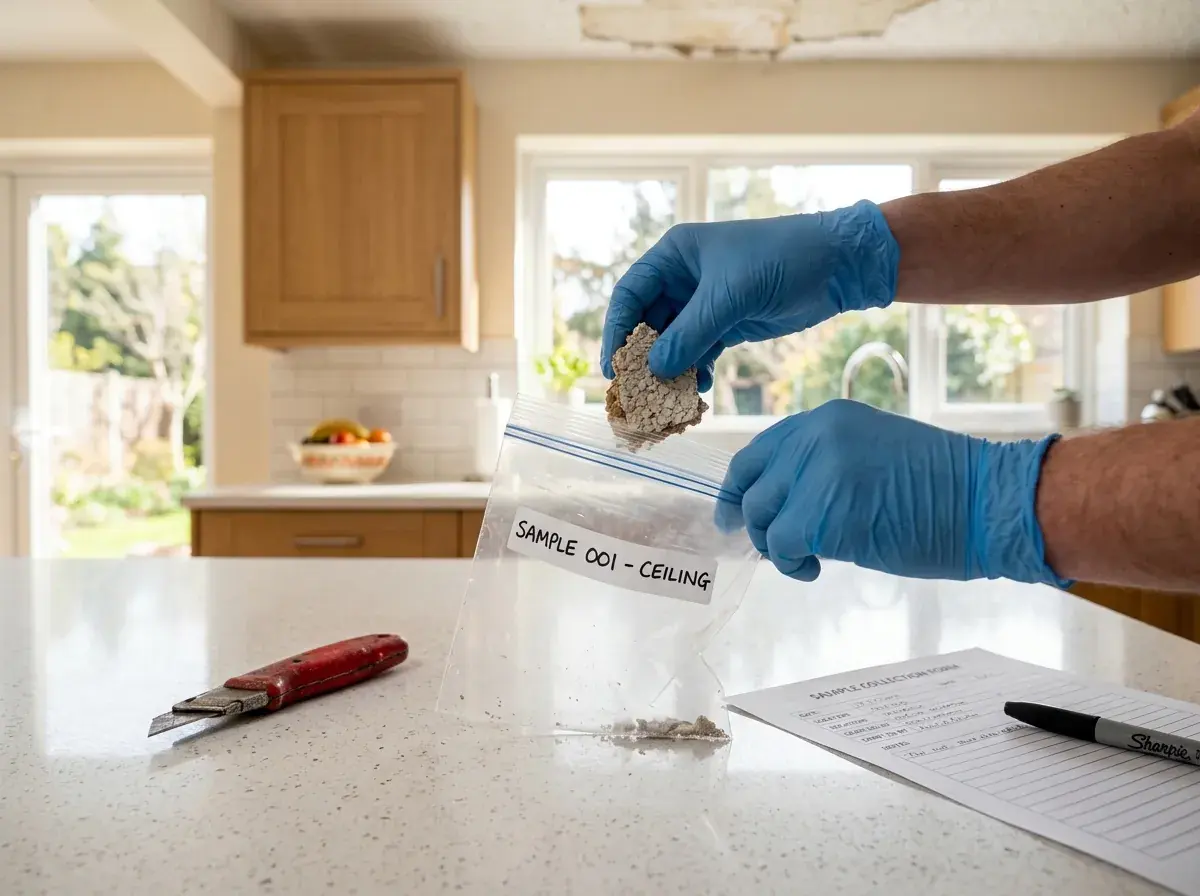
Collecting a popcorn ceiling sample for asbestos lab testing in a Charleston home

Why pre-1980 popcorn ceilings are a concern

The South Carolina Department of Environmental Services lists "ceiling texture (popcorn ceiling)" among the common asbestos-containing building materials and says buildings built before 1980 are the most likely to contain it. Because manufacturers were allowed to use up existing stock, ceilings sprayed into the mid-1980s can still test positive.

That covers a lot of Charleston. The 1960s and 70s ranches across West Ashley, the 1970s and 80s stock in Mount Pleasant's Snee Farm, and the 1980s villas on Isle of Palms and Kiawah Island all fall in the window.

Undisturbed asbestos texture is not an emergency. The problem is scraping it, which releases fibers into the air. That is why we test first and never skip the step on an older ceiling.

What South Carolina's asbestos rules say

Local competitor pages contradict each other on the dates and the rules. Here is what the regulations actually say.

SCDES, not DHEC

Since July 1, 2024, asbestos permits, licensing and notifications are handled by SCDES, which took over the DHEC environmental programs. The governing rule is SC Regulation 61-86.1. Older DHEC links and forms still circulate, but SCDES is the agency now.

1–4 unit homes are generally exempt

Federal and state rules generally do not cover private residences with four or fewer dwelling units. A single-family homeowner is not required to notify SCDES or hire a licensed inspector. SCDES still recommends treating pre-1980 texture as suspect and testing it.

Condos and 5+ unit buildings are regulated

Condominiums, cooperatives and apartment buildings with five or more units count as regulated facilities. Before renovation, a licensed inspector must inspect, removal must be done by a licensed abatement contractor, and SCDES notification and fees apply. See our condo and HOA page.

Testing is the only way to know

SCDES is clear that you cannot identify asbestos by eye; a sample must be studied under a microscope. Year built narrows the odds, a lab result settles it.

How asbestos testing works with us

Our policy is simple: any textured ceiling installed before 1990 gets a lab test before anyone picks up a scraper.

  1. Age check on the estimate

    We ask when the house was built and whether the ceiling has ever been tested or re-textured. If it is pre-1990 and untested, testing goes on the estimate as its own line.

  2. Sampling

    For single-family homes and buildings with four or fewer units, we can collect small samples from each distinct ceiling area using wet methods, bag and label them, and send them to an accredited lab. You can also use a mail-in kit yourself. For condos and 5+ unit buildings, a SCDES-licensed inspector must collect the samples, and we help you arrange it.

  3. Lab analysis

    The lab examines each sample under a microscope and reports whether asbestos is present and at what percentage. Results typically take a few business days.

  4. Negative result: we proceed

    With a clean result in hand, we schedule removal and the finish you chose.

  5. Positive result: we refer

    We are not an asbestos abatement contractor and we never remove asbestos-containing material. We refer you to an SCDES-licensed abatement contractor, who handles removal, air clearance and disposal under state rules. After clearance, we return for skim coat, texture and paint.

Asbestos testing and abatement costs

Typical ranges, not quotes. A mail-in lab test runs about $50–$100 per sample; a professional inspection runs about $250–$850, based on HomeLight, Inch Calculator and Bob Vila. Most homes need two or three samples to cover different ceiling areas.

If the result is positive, abatement by a licensed contractor typically runs $3–$7 per square foot, and up to $5–$20 in some cases. That can roughly double the cost of a project, which is why some owners of positive ceilings choose a licensed encapsulation or drywall-over approach instead. We can walk through those options with you, but the abatement contractor sets that price, not us.

A negative result costs you a small test fee and buys peace of mind for the removal and for your home's next buyer. The full price table is on the cost guide; for a written estimate that includes testing, request a free quote.

Already tested?

If you have a lab report from a home inspection or a previous owner, send it with your quote request. A documented negative result lets us skip the testing step. Read more in Do popcorn ceilings have asbestos in South Carolina?

Frequently asked questions

Short answers to the questions Charleston homeowners ask most. More on the full FAQ page.

When did they stop using asbestos in popcorn ceilings?

There is no clean cutoff. SCDES says buildings built before 1980 are the most likely to contain asbestos, but existing inventories of textured products were allowed to be used up, so ceilings sprayed into the mid-1980s can still test positive. That is why we recommend a lab test for any textured ceiling installed before 1990 rather than guessing from the year.

Do all popcorn ceilings have asbestos?

No. Many ceilings from the 1970s and 80s used vermiculite or polystyrene without asbestos, and anything sprayed from the 1990s on almost never contains it. But you cannot tell by looking, and the risk only matters once you disturb it. A lab test is the only way to know, which is why SCDES says a sample must be studied under a microscope.

How much does asbestos testing cost in Charleston?

A mail-in lab test typically runs about $50–$100 per sample. A professional inspection with a licensed inspector collecting samples typically runs $250–$850, based on HomeLight, Inch Calculator and Bob Vila data. Most single-family homes need two or three samples. We treat testing as a small, fixed line item on the estimate, not a profit center.

What happens if my popcorn ceiling tests positive for asbestos?

We stop and refer you to an SCDES-licensed asbestos abatement contractor. We do not remove, encapsulate or disturb asbestos-containing material. The abatement contractor handles removal and disposal under state rules; typical abatement runs $3–$7 per square foot, and higher in some cases. Once the ceiling is cleared, we come back for the skim coat, texture and paint.

Does South Carolina require asbestos testing before removing a popcorn ceiling?

For a private residence with four or fewer units, state notification and licensed inspection rules generally do not apply to the homeowner, though SCDES still recommends treating pre-1980 textured ceilings as suspect. Condos and buildings with five or more units are regulated: a licensed inspection, licensed abatement and SCDES notification are required before any disturbance.

Ready for smooth, modern ceilings?

Free, no-pressure quotes across the Charleston tri-county area.

Call NowFree Quote