
Can you remove a popcorn ceiling yourself? Yes. Should you? That depends on your ceiling, your weekend and how much you value a flat, even finish. We do this for a living, so you might expect us to say "always hire a pro." We would rather give you the real picture so you can decide.
Before anything else: the asbestos caveat
If your home was built before 1990 and the ceiling has never been tested, stop here and read our guide to asbestos in South Carolina popcorn ceilings. SCDES says pre-1980 ceilings are most likely to contain asbestos, and a lab test, typically $50 to $100 per mail-in sample, is the only way to know. Scraping an untested 1970s ceiling in a Charleston ranch is the one DIY mistake you cannot undo. If it tests positive, neither you nor we should scrape it; that is a job for an SCDES-licensed abatement contractor.
With a negative result in hand, here is what the job looks like.
How DIY popcorn ceiling removal works
Tools and materials
- Pump garden sprayer or large spray bottle
- Wide drywall scraper or a popcorn ceiling scraper with a bag attachment
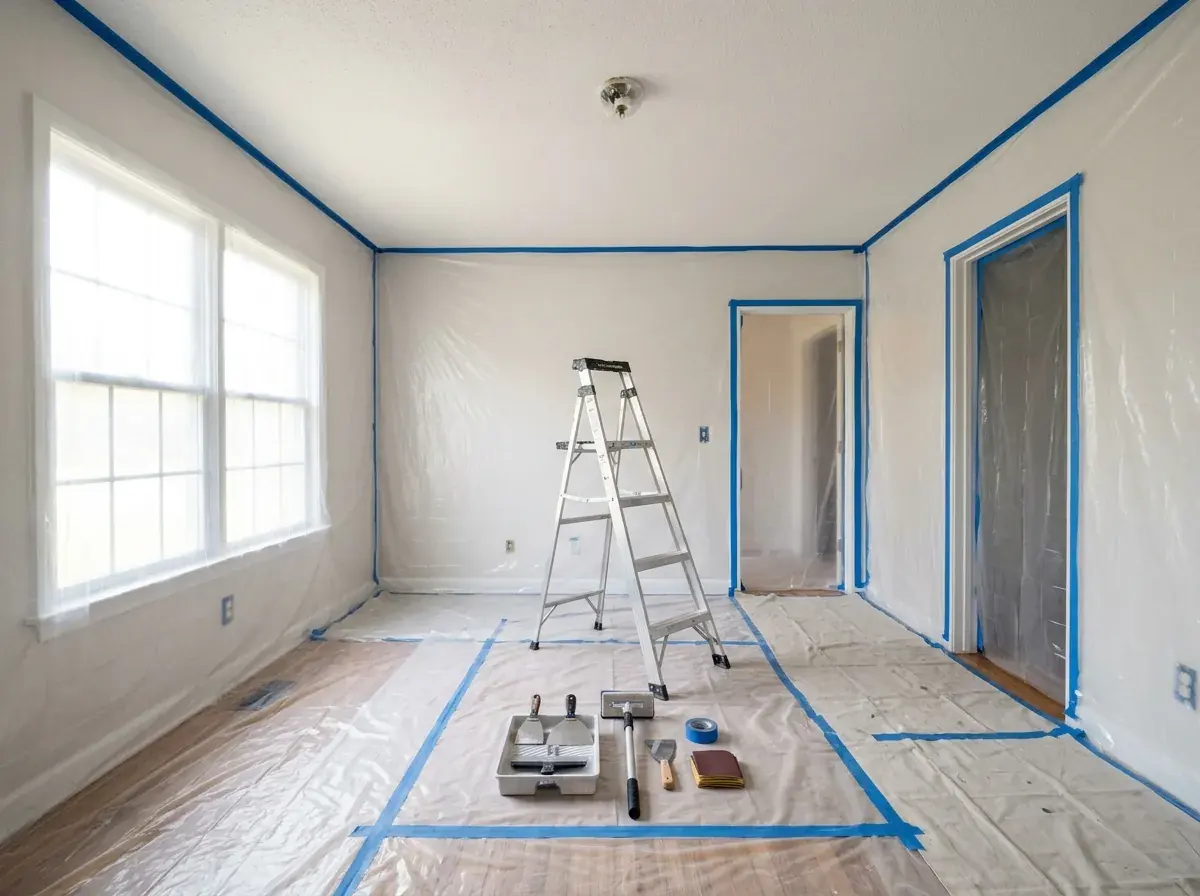
- Plastic sheeting for floors and walls, painter's tape, drop cloths
- Respirator rated for dust, safety glasses, ladder or low scaffold
- Joint compound, taping knives, sanding pole and 120-grit paper
- Drywall primer and flat ceiling paint
The wet-scrape method, step by step
Empty and seal the room
Move furniture out or to the center and wrap it. Tape plastic to the walls from the ceiling line down and overlap it onto the floor. Turn off the HVAC and cover vents so sludge and dust do not travel through the house. Remove light fixtures and fan blades and cap the wires.
Mist a section
Spray a 4-by-4-foot area until the texture is saturated but not dripping. Wait ten to fifteen minutes. Unpainted popcorn drinks water and softens into something like wet oatmeal.
Scrape
Hold the scraper at a low angle and push in long, even strokes. Too much pressure gouges the drywall paper, and every gouge becomes a repair. Let the wet texture fall onto the plastic.
Repeat, then dry
Work section by section around the room. When the ceiling is bare, let it dry fully before you touch it with compound. In Lowcountry humidity that can mean overnight with fans running.
Repair and skim
Fill nail pops and gouges, tape any open seams and skim the whole surface with thinned joint compound. This is the step that separates a professional-looking ceiling from a lumpy one, and it usually takes two or three coats with sanding between.
Prime and paint
Bare compound must be primed or the paint will flash. Two coats of flat ceiling paint finish the job.
What DIY really costs you
Materials for a single bedroom are modest, often under the price of a nice dinner out, and you can rent or buy a scraper for the rest. The real cost is time and mess. Plan on a full day to scrape and clean one room, a day of drying, and two to three more sessions for skimming, sanding and painting. The sanding step alone produces fine dust that gets everywhere unless you are disciplined with containment.
Painted popcorn changes the math. Paint seals the texture so water cannot soften it, which means scoring the surface and scraping dry, hard material. Most DIYers who start a painted ceiling end up calling for help or switching to a knockdown texture over what is left.
Vaulted ceilings, common in 1980s Charleston living rooms, add scaffolding and reach problems that make the skim coat very hard to do evenly from a ladder.
What you pay a professional for
Using typical Charleston-area ranges, scrape-only removal runs about $1 to $2 per square foot, and a complete job with skim coat, primer and paint runs $3 to $6.50 per square foot. A single bedroom usually totals $400 to $1,300 complete; a whole one-story house is typically $900 to $2,840 removal-only before finish. Our cost guide breaks this down further.
For that price you get:
- Full containment so the rest of the house stays clean
- A crew that can scrape, repair and skim a whole house in days, not weekends
- A level-4 or level-5 smooth finish that does not show lap marks under raking light
- Proper handling of drywall repairs, water stains and loose tape found under the texture
- Debris hauled away and the room vacuumed and wiped down
- A finish we stand behind: if you are not happy with it, we come back and fix it
Side-by-side comparison
| DIY | Professional | |
|---|---|---|
| Cash cost, one bedroom | Materials and tool rental | $400–$1,300 complete (typical) |
| Time, one bedroom | Three to five sessions over a week | Usually one to two days plus drying |
| Mess | High unless containment is thorough | Contained and cleaned up |
| Finish quality | Depends on skim-coat skill | Smooth or knockdown, consistent |
| Painted texture | Very difficult | About +50%, routine |
| Vaulted ceilings | Hard and risky from a ladder | About +50%, scaffolded |
| Asbestos | Must test first; never scrape positive | Must test first; referred to licensed abatement |
When DIY makes sense
Do it yourself when the ceiling has tested negative (or the home is post-1990), the texture is unpainted, the room is small and flat, and you are comfortable with joint compound. A single bedroom or hallway in a Ladson or Goose Creek starter home is a reasonable weekend project if you have the patience for the skim coat.
When hiring makes sense
Hire it out when the texture is painted, the ceilings are vaulted, you want more than one or two rooms done, you are selling and need it finished on a deadline, or you live in a condo where the regime controls contractor access and SCDES rules may apply. Hire it out, too, if you simply want a smooth ceiling and do not want to learn drywall finishing on your own living room.
Our popcorn ceiling removal service covers scraping through paint in one visit. Get a free quote and compare it against your weekend.
Frequently asked questions
Can you rent a popcorn ceiling removal machine?
Some rental centers carry powered ceiling scrapers or scrapers with vacuum attachments, but for most unpainted ceilings a garden sprayer and a wide hand scraper work just as well. The hard part of DIY is the skim coat, not the scraping.
Is popcorn ceiling removal messy?
Very, if the room is not sealed. Wet texture drops in heavy clumps and the sanding step produces fine dust. Professionals cover floors, walls and vents in plastic and vacuum before leaving so the rest of the house stays clean.
Does Home Depot do popcorn ceiling removal?
Big-box stores sell the tools and materials but do not generally perform ceiling texture removal themselves. The work is done by local drywall and painting contractors like us.